Why are borders between gravel and lawn important?
Edging between gravel paths and lawn areas plays an important role in the aesthetics, functionality, and maintenance of a garden. It helps define spaces and can either facilitate—or complicate!—cleaning and weeding tasks.
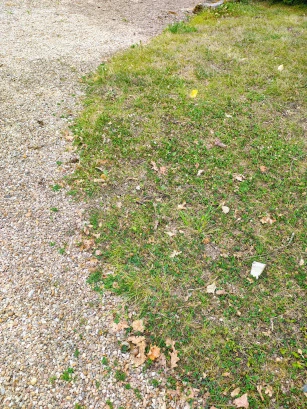
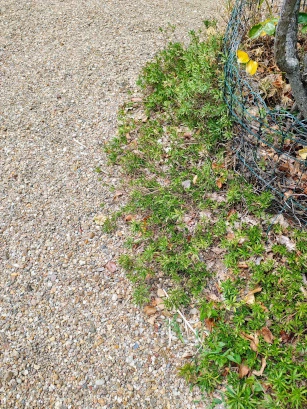
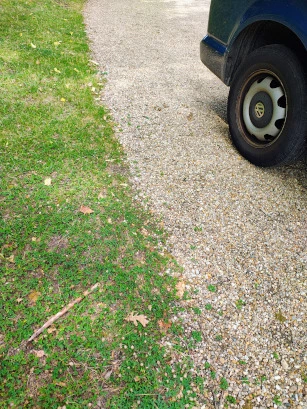
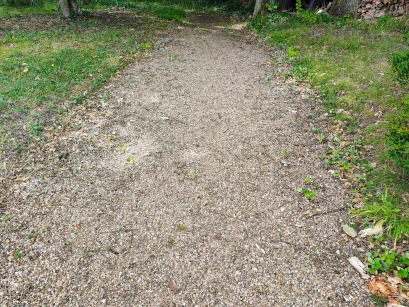
1. Choosing between straight or curved edges—with or without a separator?
The design of the borders depends on the style of the garden and technical constraints.
- Straight borders: ideal for modern gardens; they facilitate mechanical maintenance, particularly when using a towed weeder.
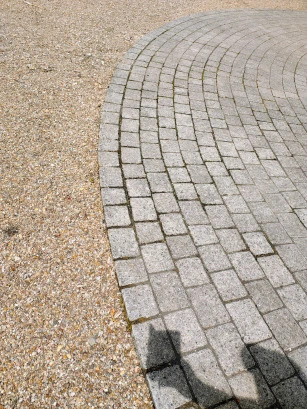
- Curved borders: add an organic, natural touch, but require greater precision during installation—and, above all, during maintenance.
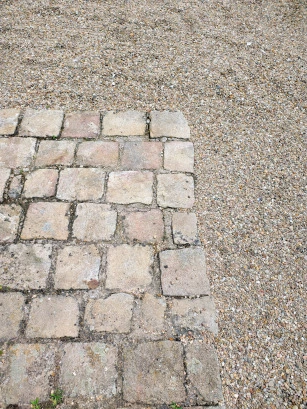
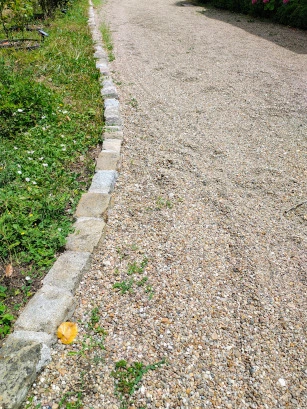
When it comes to edging, the big question is: with or without? Those in favor of using it point to the benefit of defining the border once and for all. Unfortunately, however, a rigid edging material comes with a twofold drawback! Not only maintenance for the lawn (mowing), but also for gravel areas— mechanical weeder). It is up to each individual to form their own opinion, but a natural, informal edge retains the undeniable advantage of being simple to create and maintain. Common edging materials include concrete, steel, treated wood, natural stone, and recycled plastic. Each material offers a different aesthetic and level of durability. Plastic—even when recycled and marketed specifically for edging—is best avoided due to issues with aging; it inevitably ends up breaking down into plastic fragments in the soil—the only question is not *how*, but *when*?
2. Maintaining gravel using a towed mechanical weeder
The towed mechanical weeder is an efficient tool for keeping gravel paths clean and free of weeds. However, the geometry of the borders can either facilitate or complicate the precise operation of the weeder.
- Easy maintenance of straight lines: Towed machines perform best on straight paths, as this reduces the need for maneuvering and minimizes inaccessible areas or blind spots. Needless to say, mowing is also easier on the lawn side.
- Aesthetic benefit of curved lines: Well-rounded edges often have their aesthetic admirers, but this visual appeal must be weighed against the added complexity of maintenance. It is a trade-off similar to the debates between architects with a flair for design and the construction or maintenance firms left to grapple with an overly fragile porch or a glass roof that is impossible to clean. The pursuit of beauty—what a powerful pull it has!
Note: regular maintenance using a mechanical weeder also helps to reduce the use of chemical products.
3. Managing natural grass growth on adjacent surfaces
Grass tends to colonize gravel areas if borders are not properly designed or maintained. Conversely, the gravel would like to spread over the adjacent grass! How can we ensure that everyone stays at home, and clearly?
- Installation of rigid separators (buried edging): They prevent rhizomes from crossing the boundary between the lawn and the gravel. Rigid edging (pavers, concrete, or metal) is particularly effective for containing lawn growth and keeping the gravel on the path.
- Use of edge trimmers (lawn edgers): for edges without a physical separator; this helps maintain a clean line between two surfaces. Some towed mechanical weeders feature an integrated edge trimmer, allowing you to accomplish two tasks at once.
Tips for designing aesthetic and durable borders
A well-designed—or redesigned—border enhances the entire garden while making maintenance easier.
- Contrast of materials: combine light-colored gravel with black steel or dark wood edging for a striking visual effect.
- Appropriate height: An edge just a few centimeters high is sufficient to contain the gravel without significantly hindering lawn mowing or preventing the mower from accessing the grass.
To combine aesthetics with ease of maintenance, opt for a buried rigid edging and maintain the gravel using a mechanical weeder equipped with an integrated edge trimmer. This will keep your gravel clean and weed-free, while ensuring a crisp, clear separation from the lawn.
If you want a rigid boundary, choose between concrete, metal, or paving stones. If you are comfortable with some flexibility in the line between the lawn and the gravel, you can forgo a permanent, buried border—provided you weed the gravel regularly using mechanical methods. However, for curved edges, a physical barrier is the better choice, as it is difficult to use a walk-behind or towed lawn edger with precision along a curve.
A lawn edger or edge trimmer is a tool designed to create a clean, sharp edge along a lawn. It may be an electric or gas-powered device with a rotating blade that mechanically cuts back grass that has grown beyond its intended boundary. When dealing with the transition between a lawn and a gravel area, an edger—often integrated into a mechanical weeding tool—can clear weeds from the gravel while simultaneously creating a crisp, defined edge for the lawn.